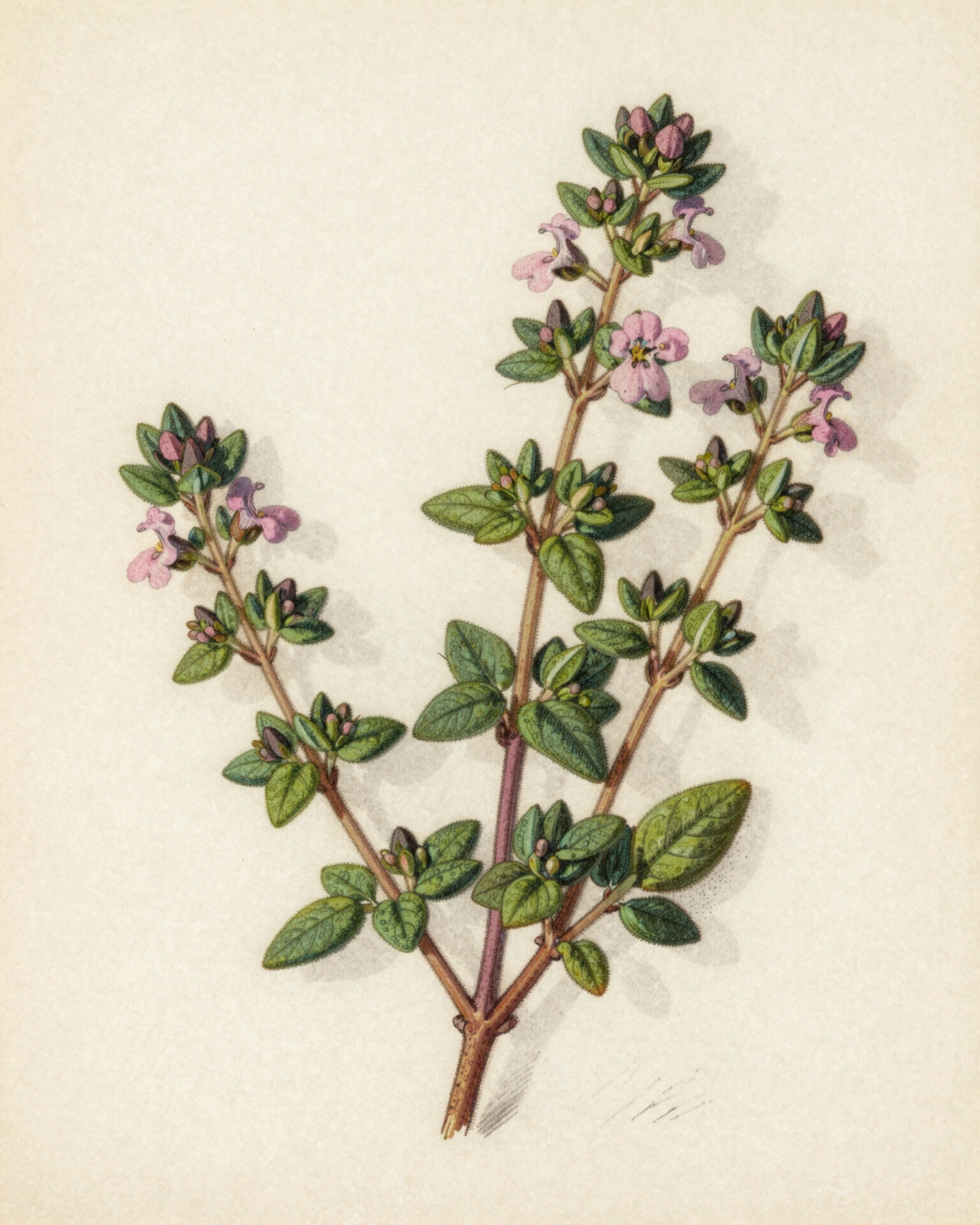
Thyme
Thymus vulgaris
Low-growing aromatic herb with tiny leaves and delicate pink or white flowers. Perfect for ground covers, rock gardens, and culinary use. Multiple varieties offer different flavors and growth habits.
Hardiness
Zones 5-9
Sunlight
Full Sun (6-8 hours)
Height
6-12 inches
Water
Low
Overview
Key Characteristics
Flowers
- •True purple-blue color
- •Single flower spike (no bracts)
- •Blooms June-August (one main flush)
- •Sweet, floral fragrance
- •Excellent for drying
Foliage
- •Silvery-gray leaves
- •Narrow, linear shape
- •Evergreen in mild climates
- •Aromatic when brushed
- •Dense, mounding habit
Growing Conditions
Climate & Hardiness
Zone Info: USDA Zones 5-9: Thrives in cold climates with winter protection. Can survive Zone 4 with heavy mulch.
Cold tolerance: -20°F to -10°F when established. Requires good drainage in winter.
Heat tolerance: Moderate. Prefers cool nights. Struggles in high humidity zones (Florida, Gulf Coast).
Ideal regions: Pacific Northwest, Northern California, Rocky Mountains, New England, upper Midwest with protection.
Sunlight Requirements
Minimum: 6 hours direct sun. More is better.
Ideal: 8+ hours full sun for maximum oil production and compact growth.
Shade tolerance: Poor. Will become leggy, bloom less, and be more disease-prone in part shade.
Tip: Plant on south-facing slopes or against reflective walls for extra heat in cold climates.
Soil Requirements
Type: Well-drained, sandy or gravelly soil. Clay must be amended.
pH: 6.5-7.5 (slightly acidic to neutral). Tolerates alkaline up to 8.0.
Drainage: CRITICAL. Lavender drowns in wet soil. Raised beds in heavy soil.
Fertility: Low to moderate. Over-fertilizing reduces oil quality and fragrance.
Amendment: Mix in coarse sand, perlite, or small gravel (30-40% by volume) for clay soils.
Watering Guide
Establishment: Water deeply once a week until roots establish (3-4 months).
Mature plants: Drought-tolerant. Water every 2-3 weeks in dry climates, less with rain.
Overwatering signs: Yellow leaves, root rot, fungal disease, weak growth.
Best practice: Deep, infrequent watering. Let soil dry completely between waterings.
Winter: Minimal to none. Wet winter soil kills more lavender than cold temperatures.
Planting Guide
When to Plant
Spring: After last frost when soil warms to 60°F. Best for cold climates (Zones 5-6).
Fall: 6-8 weeks before first frost. Allows root establishment before winter. Best for Zones 7-9.
Spacing
- •Garden/landscape: 2-3 feet apart (allows air circulation)
- •Hedges: 18-24 inches for dense screen
- •Commercial rows: 3-4 feet in-row, 6-8 feet between rows (tractor access)
- •Containers: One plant per 12-14" pot minimum
Planting Steps
- Dig hole 2x wider than root ball, same depth. Don't bury crown.
- Amend heavy soil with 2-3 inches of coarse sand or gravel mixed into hole.
- Remove plant gently from pot, loosen circling roots. Don't break root ball.
- Set plant at same depth it was growing in pot. Crown should be slightly above soil level.
- Backfill with native soil (not potting mix). Firm gently.
- Water deeply once, then let soil dry before next watering.
- Mulch lightly with gravel or small stones (not bark). Keep mulch away from stems.
⚠️ Common Mistake: Planting too deep or in amended "rich" soil. Lavender wants poor, gritty soil and excellent drainage. Plant high, not low.
Care & Maintenance
Pruning Schedule
Spring Pruning (Essential):
Cut back 1/3 of plant in early spring when new green growth appears. Shape into mound. Removes woody winter growth and encourages compact form.
After Bloom (Optional):
Deadhead spent flowers to tidy appearance and sometimes encourage light second bloom. Not required for plant health.
Fall Pruning (AVOID):
Never prune in fall. New growth won't harden off before winter and will die back. Prune only in spring.
⚠️ Never cut into old wood (brown, woody stems). Lavender won't resprout from old wood. Always leave green foliage.
Fertilizing
First year: None. Let roots establish in lean soil.
Established plants: Light feeding in early spring with balanced fertilizer (5-10-10 or similar). Half-strength.
Frequency: Once per year maximum. Over-fertilizing causes leggy growth and reduced fragrance.
Organic option: Compost tea or fish emulsion, diluted 50%.
Less is more with lavender. Lean, hungry plants produce the best oils.
Winter Protection
Zones 5-6 (borderline): Mulch with evergreen boughs or straw after ground freezes. Remove in early spring.
Snow cover: Excellent insulation. Plants under snow survive better than those in bare soil.
Biggest threat: Wet soil + freeze/thaw cycles. Ensure drainage is perfect before winter.
Container plants: Move to unheated garage or bury pot in ground for winter.
Wind protection: Plant near walls, fences, or windbreaks in cold climates.
Harvesting for Maximum Quality
When to Harvest
Timing is everything. Harvest when 50% of flowers on each spike have opened. Too early = less oil. Too late = flowers lose quality.
Time of day. Morning after dew dries (9-11 AM). Oils are most concentrated. Avoid afternoon heat.
Weather. Dry conditions only. Never harvest wet flowers (they'll mold).
Harvesting Technique
- Cut stems 2-3 inches into green foliage (not into woody growth)
- Use sharp, clean pruning shears or knife
- Bundle 50-100 stems with rubber band (shrinks as stems dry)
- Hang upside down in dark, well-ventilated space
- Dry for 2-4 weeks until stems snap cleanly
Expected Yield
- •Year 1: Minimal harvest. Let plant establish.
- •Year 2: 100-200 stems per plant
- •Year 3+: 300-500 stems per mature plant
- •Peak production: Years 4-8
Uses & Applications
Culinary
- •Baking
- •Herbal teas
- •Sugar and honey
Wellness
- •Essential oils
- •Sleep sachets
- •Bath soaks
Home & Craft
- •Dried arrangements
- •Potpourri
- •Wreaths
Commercial
- •Fresh bundles
- •Distillation
- •Culinary sales
Ready to Grow Thyme?
Use our Variety Finder to see if Thyme is the right choice for your climate and growing goals.
Find Your Perfect Varieties